The financial landscape has changed rapidly in recent years, with digital finance tools (DFL) becoming an essential part of everyday life. These tools have made money management faster, simpler, and more accessible than ever before. Earlier, people had to visit banks for basic transactions, maintain handwritten expense records, and rely heavily on financial advisors for investment decisions. Today, most financial activities can be completed within minutes using smartphones and computers.
Digital finance tools allow users to manage banking, payments, budgeting, investments, and financial planning on a single platform. Globally, their growing adoption shows how deeply financial technology has become integrated into daily life.
However, this digital transformation also brings new challenges. As more financial data is stored and shared online, concerns about cybersecurity, privacy, and misuse of personal information are increasing. Users must understand both the benefits and risks of digital finance tools to use them safely and wisely.
This article outlines what digital finance tools are, why they matter today, the key sectors they serve, and the five (5) major benefits and risks for users.
What are Digital Finance Tools?
Digital finance tools are software applications and online platforms that help users manage financial activities electronically. These tools operate through smartphones, tablets, and computers, allowing people to perform banking, payments, budgeting, investments, and tax-related tasks without visiting physical offices.
Digital finance tools replace branch visits and paperwork with fully online operations. They provide users with 24/7 access to financial information and allow transactions from anywhere with an internet connection.
These tools are designed to make financial management faster, more accurate, and more convenient for both individuals and businesses.
Seven (7) Core Characteristics of Digital Finance Tools
Let’s have a quick look on the core features of DFL.
- Digital-First Design: Digital finance tools are built specifically for online use. They use mobile-friendly interfaces, cloud technology, and real-time data updates to work smoothly across multiple devices.
- Automation and Smart Features: Modern digital finance tools use algorithms and artificial intelligence to automate routine tasks such as expense tracking, bill reminders, and investment calculations. They also offer personalised financial insights based on user behaviour.
- Integration with Financial Services: Through secure systems and open banking standards, these tools can connect with multiple banks and financial institutions. This allows users to manage different accounts from a single platform.
- Real-Time Processing: Most digital finance tools work in real time or near real time. Transactions, balance updates, and alerts happen instantly, unlike traditional systems that may take days.
- User-Friendly Interface: These tools focus on simple navigation, visual reports and easy workflows so that even non-technical users can manage their finances comfortably.
- Accessibility and Financial Inclusion: Digital finance tools reduce barriers to financial services by making banking and investing available to people in remote or underserved areas, supporting wider financial inclusion.
- Strong Security Protocols: Modern tools use two-factor authentication (2FA), OTP verifi cation, and encryption technology to protect user data and transactions. When used responsibly, these features make digital payments safer than carrying cash.
Digital Finance Tools – Popular Sectors
The digital finance ecosystem includes many categories designed for different financial needs. Understanding the main sectors in digital financial tools helps users choose suitable solutions for personal and business finance management. Let’s have a quick look.
- Budgeting and Expense Tracking Applications: These tools help users create budgets, track spending, and control expenses. They automatically categorise transactions and generate financial reports.
- Digital Banking and Neobanks: Digital banking platforms are designed to offer financial services directly through mobile apps instead of traditional bank branches. They offer account management, transfers, bill payments, and digital support.
- Loan and Insurance Platforms: These platforms allow users to compare interest rates, EMI options, repayment periods, and insurance premiums to choose suitable financial products.
- Investment and Portfolio Management Platforms: These tools make investing accessible to beginners and experienced investors by offering shares, mutual funds, and automated portfolios.
- Payment Processing and Transfer Services: These tools enable fast money transfers, online payments, and peer-to-peer transactions across regions and currencies.
- Accounting and Bookkeeping Software: Designed for businesses and freelancers to manage income, expenses, invoices, and tax records digitally.
- Credit Monitoring and Improvement Tools: Platforms that help users monitor credit scores and improve financial health through alerts and guidance.
- Cryptocurrency and Digital Asset Management: Tools for buying, selling, and managing digital currencies and tracking crypto investments.
- Compliance and Tax Filing Services: These tools simplify income tax filing, GST returns, and other statutory compliances through guided steps and automated calculations, reducing errors and saving time.
Why Digital Finance Tools Are Important Today?
The importance of digital finance tools goes beyond convenience. These tools are reshaping the financial system by improving access, efficiency, and financial awareness while creating new opportunities for economic participation.
They help individuals and businesses manage money more effectively and make informed financial decisions in real time. Let’s have a quick reading.
- Democratizing Financial Services: Earlier, advanced financial services such as investment planning and credit products were mostly available to wealthy individuals or large institutions. Digital finance tools have reshaped this system entirely. Today, anyone with a smartphone can open a bank account, apply for credit cards, invest in mutual funds, track expenses, and plan finances using digital platforms. This has increased financial awareness and encouraged people to take control of their money decisions. 👉To know about latest credit cards launch please visit the blog “5 NEW CREDIT CARDS LAUNCHED: WHICH ONE?”
- Expanding Financial Inclusion: Digital finance tools play an important role in bringing unbanked and underbanked populations into the formal financial system. Mobile banking and digital payments allow people in rural and remote areas to access services without visiting branches. In India, digital payment systems and online banking have helped millions receive subsidies directly and participate in digital transactions. Small traders and vendors also benefit by accepting digital payments, improving transparency and income security.
- Providing Real-Time Financial Visibility: Instead of monthly statements, digital finance tools offer real-time updates on transactions and spending habits. Users can instantly see where their money is going, set spending limits, and receive alerts for unusual activity. This improves budgeting habits and supports disciplined saving and spending.
- Reducing Financial Management Costs: Digital finance tools reduce the cost of managing money by eliminating paperwork and physical visits. For example, a small shop owner using UPI and mobile banking saves on cash handling and travel to bank branches. Online investment platforms allow individuals to invest directly without paying high agent commissions. Tax fi ling portals also reduce professional charges by offering low-cost guided services.
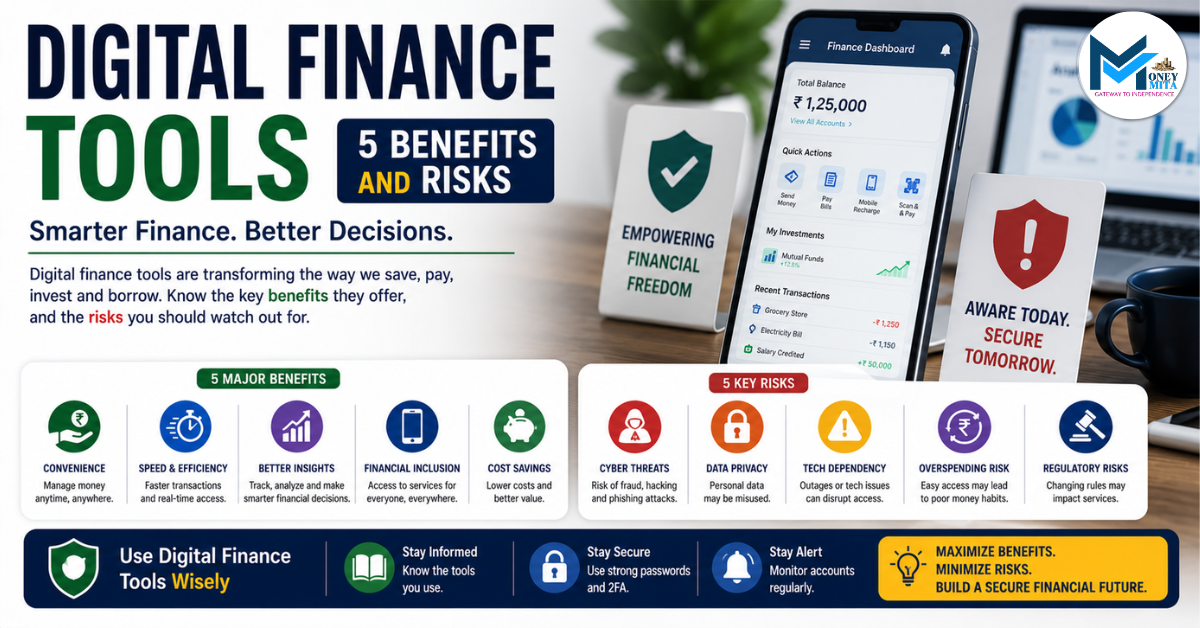
5 Major Benefits of Digital Finance Tools
- Improved Efficiency and Automation: Digital finance tools excel at streamlining processes through automation. Tasks such as expense categorisation, invoice generation, bill payments, and portfolio management are now handled automatically. This automation significantly reduces the time spent on financial management while improving accuracy.
- Enhanced Financial Visibility and Control: Users get a unified view of multiple accounts, real-time balances, and spending patterns, helping them control expenses and improve budgeting.
- Personalised Financial Guidance: Digital tools use data analysis to provide customised suggestions for saving, investing, and managing risk based on individual financial behaviour.
- Increased Accessibility and Financial Inclusion: With just a smartphone and internet connection, users can access banking, credit, and investment services, helping bring underserved populations into the financial system.
- Cost Savings and Better Returns: Many tools offer low or zero fees, help avoid late charges, and identify unnecessary spending, leading to better financial outcomes.
5 Major Risks of Digital Finance Tools
1.Cybersecurity and Data Privacy Threats: One of the biggest risks of digital finance tools is exposure to cybercrime. These platforms store sensitive information such as bank account details, transaction records, and personal identification data, which makes them attractive targets for hackers and fraudsters.
Common threats include phishing attacks, fake apps, identity theft, and unauthorised transactions.
To protect users, regulatory authorities regularly issue safety guidelines for digital transactions. For instance, the Reserve Bank of India issues official guidelines on digital payment security and fraud prevention, helping users use digital finance tools safely and responsibly. Customers can file any cyber complaint on the platform “RBI Sachet.”
This makes awareness and strong digital hygiene essential when using digital finance tools.
2. Technology Dependency and Service Disruptions: Heavy dependence on digital platforms creates vulnerability during technical failures. Server failures, poor internet connectivity, or app crashes can prevent access to funds, especially during emergencies.
3. Digital Divide and Exclusion: Although digital finance tools aim to promote inclusion, they can also widen inequality. Not everyone has access to smartphones or digital literacy, which can exclude elderly and low-income populations.
4. Algorithmic Bias and Discrimination: Many digital finance tools use automated systems to decide loan approvals and credit limits. These systems rely on past data, which may contain hidden bias. As a result, some users may be unfairly rejected or charged higher interest rates without clear reasons. This lack of transparency can create discrimination and reduce trust in digital finance tools.
5. Over-Indebtedness and Behavioural Risks: Easy access to digital credit and BNPL (buy-now-pay-later )services can encourage overspending, late repayments, and debt accumulation without full financial understanding, resulting in mental stress and anxiety.
Frequently Asked Questions (FAQ)
Q1. Who can use digital finance tools?
Ans. Anyone with a smartphone or computer and an internet connection can use digital finance tools, including students, homemakers, professionals, freelancers, and business owners.
Q2. How much do digital finance tools cost?
Ans. Many budgeting and payment apps are free. Some investment and accounting platforms may charge service or subscription fees depending on features.
Q3. Will using digital finance tools affect my credit score?
Ans. Using budgeting or payment apps does not affect credit scores. Applying for loans or credit cards may involve credit checks that cause a small temporary impact.
Q4. Can digital finance tools replace traditional banking?
Ans. No.
They complement traditional banking by providing faster digital access while banks continue core financial operations.
Q5. What is cybercrime in digital finance tools?
Ans. Cybercrime refers to illegal online activities such as phishing, fake apps, identity theft, hacking, and unauthorised transactions.
Q6. What is a Neobank?
Ans. A Neobank is a digital-only bank that provides banking services through mobile apps without physical branches.