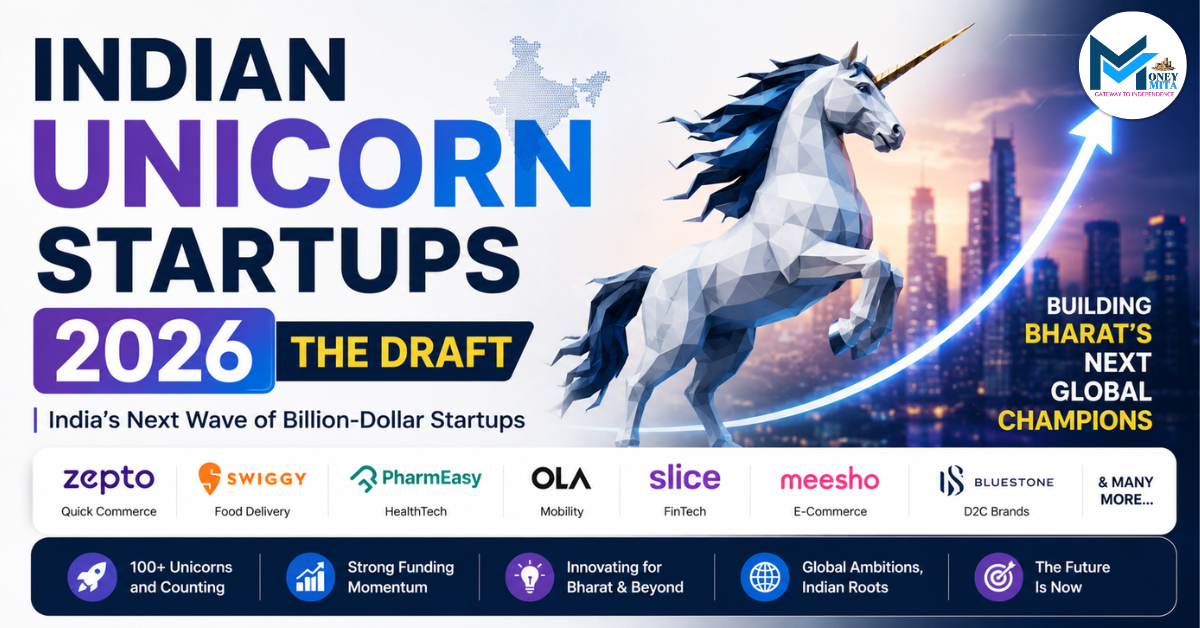
India’s startup ecosystem has grown rapidly over the last decade, giving rise to a new class of billion-dollar companies known as Indian unicorn startups. These privately held startups valued at over $1 billion are reshaping innovation and strengthening India’s position in the global economy.
As of 2026, India has over 120 unicorn startups across various sectors. across sectors such as fintech, edtech, SaaS, and healthtech, making it the third-largest unicorn hub in the world after the United States and China. This remarkable startup growth in India continues to attract global venture capital and reshape the economy.
This article explains the meaning of unicorn startups, India’s unicorn journey, key growth drivers, leading sectors, and future trends shaping Indian unicorns in 2026.
What is a Unicorn?
Origin of the Term
The term “UNICORN” was coined in 2013 by Aileen Lee, a venture capitalist and founder of Cowboy Ventures, to describe rare startups valued at over $1 billion. She used it to describe the statistical rarity of startups achieving a billion-dollar valuation at that time, estimating fewer than 40 such companies existed globally.
Since then, the startup landscape has evolved dramatically, and the term has become mainstream. India, once an outsider in the unicorn race, is now the third-largest unicorn ecosystem in the world, behind only the U.S. and China.
Definition of Unicorn Startups
While the term “unicorn” has various meanings across different contexts (from mythology to human resources), in the financial world, it specifically refers to privately owned startups with these key characteristics:
- Private Company Status: Unicorns are founded as private companies with scalable business models targeting Indian and global markets.
- Technology-Driven Innovation: These startups leverage cutting-edge technology with innovative ideas across sectors, which range from online education and financial services to food delivery and hospitality.
- Billion-Dollar Valuation: The defining characteristic of unicorn startups in India and globally is a valuation exceeding $1 billion without being listed on stock exchanges.
- Private Financing: Rather than raising capital through public markets, unicorns seek investment from venture capitalists, private equity firms, and other institutional investors.
- Management Control: Founders typically maintain significant ownership and management control, avoiding the scrutiny and regulations that come with public listing.
Unicorn Companies In India
As of January 2026, India has approximately 125 unicorns—startups valued at $1 billion or more. However, only about 91 of these maintain valuations above the $1 billion threshold, as some companies have experienced valuation declines. Some of the notable unicorns in India are:-
- EdTech: Vedantu, Unacademy, BYJU’s, etc.
- HealthTech: Pharmeasy, Tata 1mg, etc.
- Food & Beverage: Zomato, Swiggy, etc.
- Travel & Hospitality: OYO, MakeMyTrip.
India’s Unicorn Journey
This section traces India’s transformation from a newbie startup environment to a globally recognised unicorn hub. It includes key phases, policy support, funding trends, and structural shifts that enabled this remarkable startup growth in India.
Here’s a quick look at how the journey unfolded:
- First Breakthrough (2011): InMobi became India’s first unicorn, placing a mark on the global unicorn map and proving global-scale innovation was possible from India.
- Growth Phase (2015–2018): Flipkart, Ola, and Paytm led the first wave of Indian unicorns, attracting global investors and building user-first digital products. This period saw the rise of mobile-first and app-based services.
- Startup India Push (2016): Government support through the “Startup India Mission” gave startups tax benefits, funding access, and regulatory ease. This initiative boosted startup visibility, especially in Tier II/III cities.
- COVID Era – Boom Years (2020–2021): The pandemic accelerated digital adoption due to remote work, online payments, and an e-commerce surge, leading to 44 new unicorn startups in India in 2021, the highest in a single year. Edtech, healthtech, and D2C brands flourished.
- Slowdown & Reset (2022–2023): Global funding slowed; focus shifted to profitability and governance among billion-dollar startups.
- New Focus (2024–2025): Deep-tech, B2B SaaS, and clean-tech unicorns are rising, with more Indian unicorns eyeing IPOs. There’s an increased focus on IPOs and exits, especially from mature unicorns. India aims to balance valuation with value creation.
- Global Rank: India is now the third-largest unicorn ecosystem globally, after the U.S. and China.
Timeline of Indian Unicorn Growth
- 2011-India’s first unicorn: InMobi, an ad-tech firm.
- 2015–2018-Rise of early unicorns like Flipkart, Ola, Paytm, and Snapdeal.
- 2021-Record-breaking year: 44 new unicorn startups in India created in one year.
- 2024–2026-Focus shifts to profitability, IPOs.
Indian Startup Unicorn Ecosystem: Major Milestones
- First Decacorn: Flipkart-Valued over $10B after Walmart acquisition.
- 100th Unicorn: Open, a neobanking startup (May 2022).
- Youngest Unicorn: Mensa brands became a unicorn in just 6 months.
- Most Funded Sector: Fintech, followed by SaaS and E-commerce.
- Global Rank: India becomes the 3rd-largest unicorn hub globally (after the US and China).
Structural Factors Behind the Journey
- A young population and rising digital adoption.
- Affordable mobile internet and smartphones.
- UPI and fintech reforms enabling digital payments.
- Global capital combined with skilled local talent.
Key Growth Drivers for Indian Unicorns
India’s unicorn boom is driven by a combination of market opportunity, digital transformation, and supportive infrastructure.
- Market Size and Demographics: India’s population of more than 1.4 billion creates massive demand across sectors. A growing middle class with rising disposable income supports consumption-based startups. Rapid urbanisation and mobile penetration allow startups to scale quickly across cities and regions.
- Digital Transformation Push: Initiatives such as Digital India, Aadhaar, and UPI have reduced entry barriers for startups. Affordable data access has made India one of the world’s largest online user bases. The COVID-19 pandemic accelerated digital behaviour, boosting sectors such as fintech, edtech, and e-commerce.
Indian Unicorn Sectors: Leading In 2026′
- Fintech & Financial Services: Fintech is the largest unicorn sector (approx. 27%) with companies like Razorpay, PhonePe, and CRED. Growth is driven by UPI adoption, financial inclusion, and regulatory support. Please Read the “Fintech Unicorn List 2026“.
- E-Commerce,D2C (Direct-to-Consumer) & Retail: This sector covers (approx.)13% of leading startup sectors in India. Brands such as Mamaearth, Licious, and BoAt are transforming retail through digital-first strategies and strong customer engagement. Future trends show D2C unicorns expanding into international markets and omnichannel strategies. Please Read the “E-Com Unicorn List 2026”.
- Enterprise Tech/SaaS (18%): This sector covers (approx.)18% of leading startup sectors in India. India has produced global SaaS leaders such as Zoho, Freshworks, and Postman. These firms serve international markets and increasingly focus on AI-driven solutions. Please Read the “Saas & Enterprise Tech Unicorn List 2026”.
- Edtech: Edtech expanded rapidly (covering approx. 11% of startup sectors in India) during the COVID-19 pandemic with platforms like BYJU’S, Unacademy, and PhysicsWallah. The sector is now moving towards sustainable and diversified business models. Please Read the “EdTech Unicorn List 2026”.
- Healthtech & MedTech (7%): Healthtech unicorns such as PharmEasy and Innovaccer address healthcare access through telemedicine, diagnostics, and hospital management systems. It covers approx. 7% of startup sectors in India. Please Read the “Healthtech & MedTech Unicorn List 2026”.
- Logistics, Mobility & AutoTech: Companies like Delhivery andBlackBuck focus on technology-driven warehousing, freight management, and last-mile delivery solutions. Upcoming trends in the logistics sector suggest increased focus on international shipping and eco-friendly supply chains. It covers approx. 6% of startup sectors in India. Please Read the “Logistics, Mobility & AutoTech Unicorn List 2026“.
- PropTech & Home Services: PropTech and home services unicorns are digitising property search, rentals, and household services. Platforms like NoBroker, Livspace, and Urban Company simplify access to real estate and home services through technology-enabled marketplaces and managed service models. Please Read the “PropTech & Home Services Unicorn List 2026“.
- FoodTech & Cloud Kitchen: FoodTech and cloud kitchen unicorns focus on digital food delivery and asset-light restaurant models. Companies such as Swiggy and Rebel Foods have scaled rapidly using delivery networks and brand-led cloud kitchens. Growth is supported by urban demand, quick commerce, and platform-based food brands. Please Read the “FoodTech & Cloud kitchen Unicorn List 2026“.
- B2B Commerce & Industrial Platforms: B2B commerce unicorns operate in wholesale trade, industrial supplies, and construction materials using tech-enabled procurement and credit models. Companies such as OfBusiness, Zetwerk, Infra.Market, and Moglix serve MSMEs and enterprises through integrated supply and financing platforms. Please Read the “B2B Commerce & Industrial Platforms Unicorn List 2026“.
Billion Dollar Startups In India: Future Trends in 2026
The next phase of Indian unicorn growth will be driven by innovation, sustainability, and profitability. In 2025, unicorn startups are expected to focus on emerging sectors, stronger business models, and selective investments. The next wave of Indian unicorns is emerging from innovative sectors that address key challenges and opportunities.
Key startup and unicorn trends to watch in 2025 include evolving sectors, digital transformation, and innovation-driven disruption.
| TREND AREA | FOCUS | WHAT IT MEANS |
| Gaming and Entertainment | Digital content and mobile gaming growth. | Platforms like Dream11 and MPL benefit from rising smartphone usage and online engagement. Check the “Games Unicorn List 2026” |
| Clean and Climate Tech | Sustainability and green innovation. | Startups working on renewable energy, EV infrastructure, and carbon management attract strong investor interest. |
| SpaceTech and AgriTech | Advanced and rural-focused technologies. | Companies like Skyroot and Pixxel lead space innovation, while agritech improves productivity and farmer income. |
| Profitability Focus | Stronger business fundamentals. | New unicorns prioritise unit economics and long-term profitability over rapid expansion. |
| Global – First Approach | International market entry. | Indian startups target global customers from the early stages, especially in SaaS and deep tech. |
| Consolidation (M & A ) | Mergers and acquisitions. | Mature unicorns acquire smaller startups to strengthen technology and defend market position. |
| Specialised Funding | Sector-specific investment. | Dedicated funds emerge for climate tech, healthcare, and deep tech startups. |
| Tier II and III Expansion | Wider startup geography. | More unicorn founders come from non-metro cities, spreading innovation beyond major hubs. |
IPO Journey of Indian Unicorns (Listed & Upcoming)
As India’s startup ecosystem evolves, unicorn companies are transitioning from private funding to public ownership. A growing number of unicorns have already entered the stock market, and many more are preparing for public listings. This shift plays a key role in establishing transparent valuations and strengthening investor confidence.
| YEARS | UNICORN COMPANIES LISTED [ BRAND NAMES ] |
| 2021 | Freshworks, Nykaa, Paytm, Policybazaar, Zomato. |
| 2022 | Delhivery. |
| 2023 | Mamaearth. |
| 2024 | BlackBuck, Digit Insurance, FirstCry, MobiKwik, Ola Electric, Swiggy. |
| 2025 | Ather Energy. |
| 2026 | Amagi. |
⏳ Upcoming Unicorns (IPO Plans)
- Preparing for IPOs: BoAt, PhonePe, PharmEasy (API Holdings), Zepto.
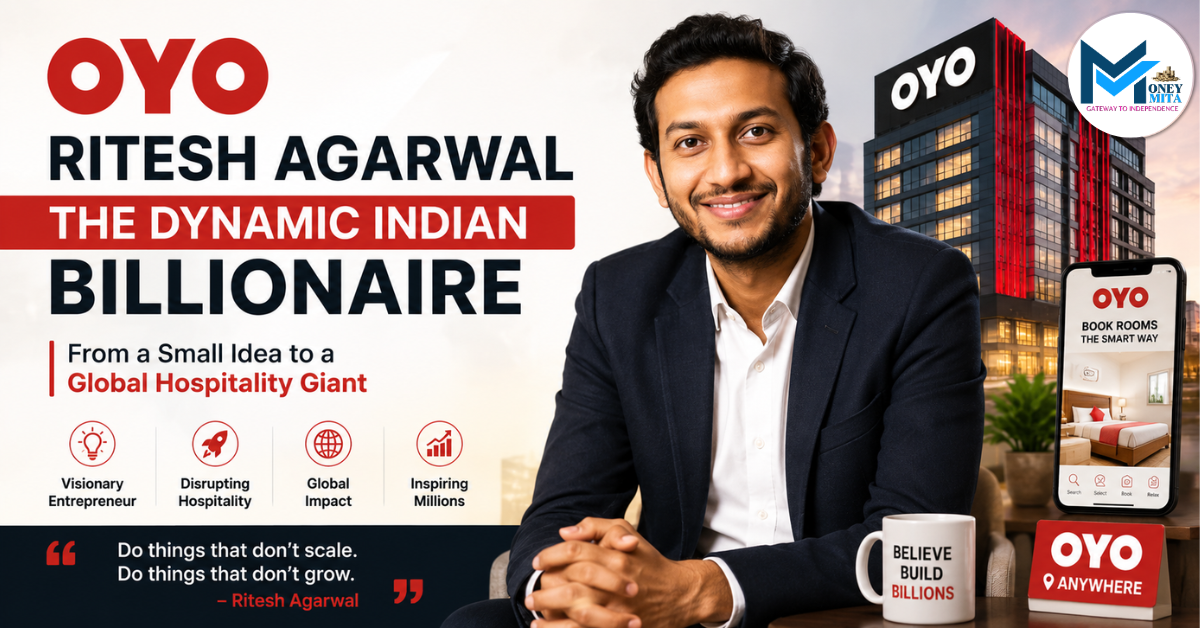
- IPO Deferred: OYO (after SEBI observations).
To know about OYO Visionary Ritesh Agarwal Please read the Blog Post “OYO Ritesh Agarwal: Dynamic Indian Billionaire”.
📌 Why These IPOs Matter?
These IPOs will:
- Provide liquidity to early investors and founders.
- Improve transparency and governance.
- Test the true market valuation of unicorn startups.
- Attract more global investment into India’s startup ecosystem.
Emerging Tech Sectors
Artificial intelligence, deep tech, climate technology, and space technology are attracting strong investor interest. Government initiatives such as Startup20 and Digital India are supporting innovation in these areas.
Frequently Asked Questions (FAQ)
Q1. How should Indians interpret the $1 billion valuation of a unicorn?
Ans. The term “unicorn” is globally defined in U.S. dollars. In India, this is approximately equal to ₹8,300–8,500 crore depending on exchange rates.
Q2. What is a scalable business model?
Ans. A scalable business model enables a company to grow revenue rapidly with minimal increase in costs. Example: Zoho expanded globally using technology-driven growth.
Q3. What is the Startup India Mission?
Ans. Launched in 2016, Startup India is a government initiative that supports entrepreneurship through tax benefits, funding access, regulatory ease and networking opportunities.
Q4. What is Deep Tech?
Ans. Deep tech refers to startups based on advanced technologies such as AI, robotics, and biotechnology that solve complex problems through scientific innovation.
Q5. What is SaaS?
Ans. SaaS (Software as a Service) is a cloud-based model where software is accessed online via subscription instead of being installed locally. Example: Zoho, Freshworks, and Postman offer SaaS tools for businesses worldwide.
Q6. What is a Cleantech Unicorn?
Ans. A cleantech unicorn focuses on environmentally sustainable technologies such as renewable energy, electric mobility, and waste management. Example: ReNew Power (India) is a cleantech unicorn offering renewable energy solutions through wind and solar power.
Q7. What is a Funding Winter?
Ans. A funding winter is a period when investors reduce startup funding due to economic slowdown or market uncertainty, leading to fewer deals and tighter capital.
Q8. What is Startup20?
Ans. Startup20 is a G20 engagement group launched in 2023 to promote global startup policies, innovation, and cross-border funding. It brings together startups, investors, and policymakers to promote innovation, ease cross-border funding, and build a global startup ecosystem.
Concluding Note
While every unicorn operates in a different industry, one common factor is digital talent. These companies hire professionals skilled in digital marketing, content creation, SEO, data analysis, software development, and affiliate partnerships. Individuals who develop such skills can explore freelancing, remote work, or entrepreneurial opportunities.
Read the article: HOW TO MAKE MONEY ONLINE:12 DIGITAL SKILLS FOR 2026